DPI Announces February 2006 Pricing & Product Line Update
On February 16, Digital Projection released new 2006 pricing for both commercial AV and home cinema dealers. This update is available to our dealers and reps by logging into the DP website and downloading the PDF files.
Among the many enhancements to this years pricing and product line, here are a few highlights you will not want to miss:
New Products!
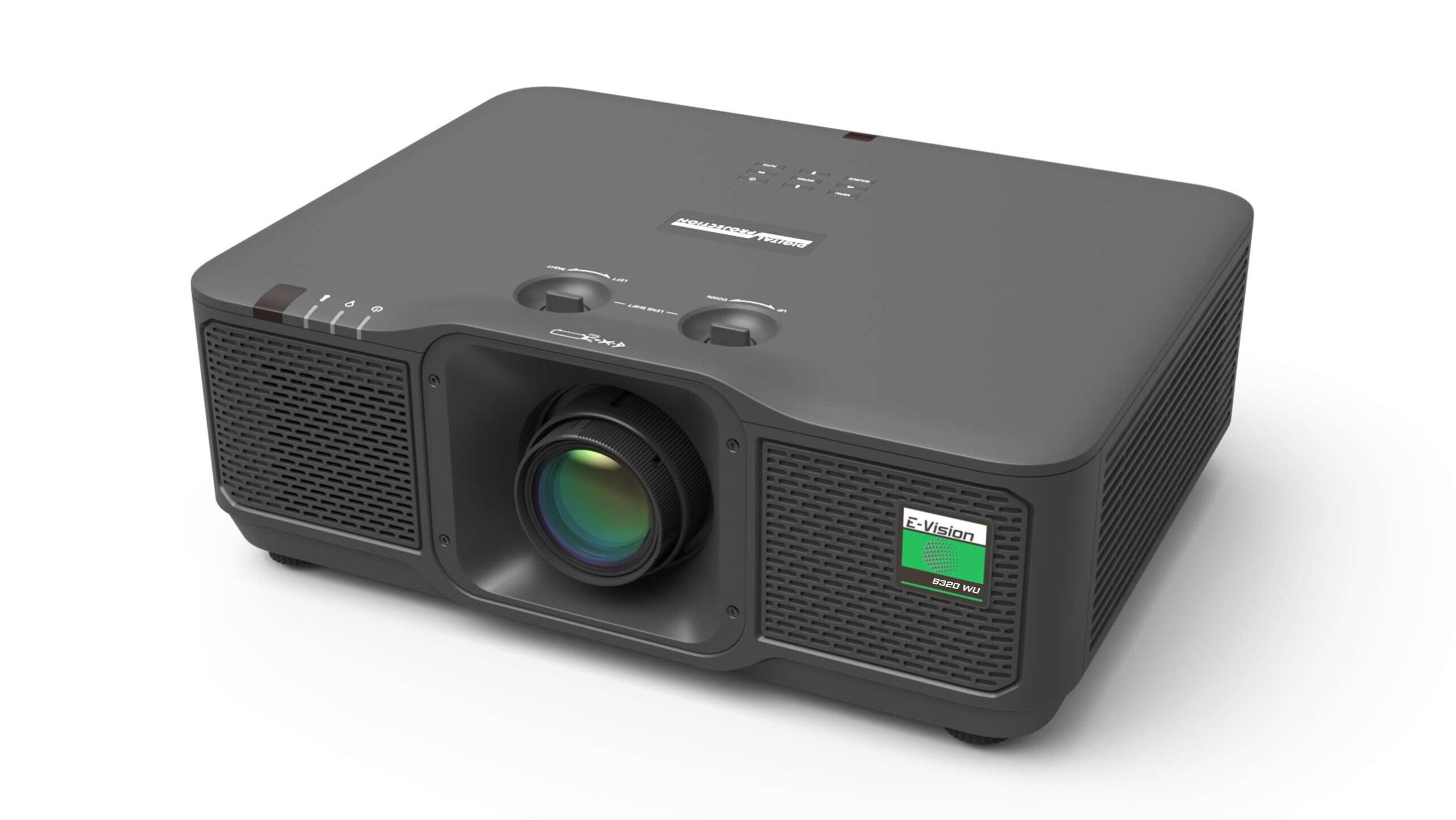
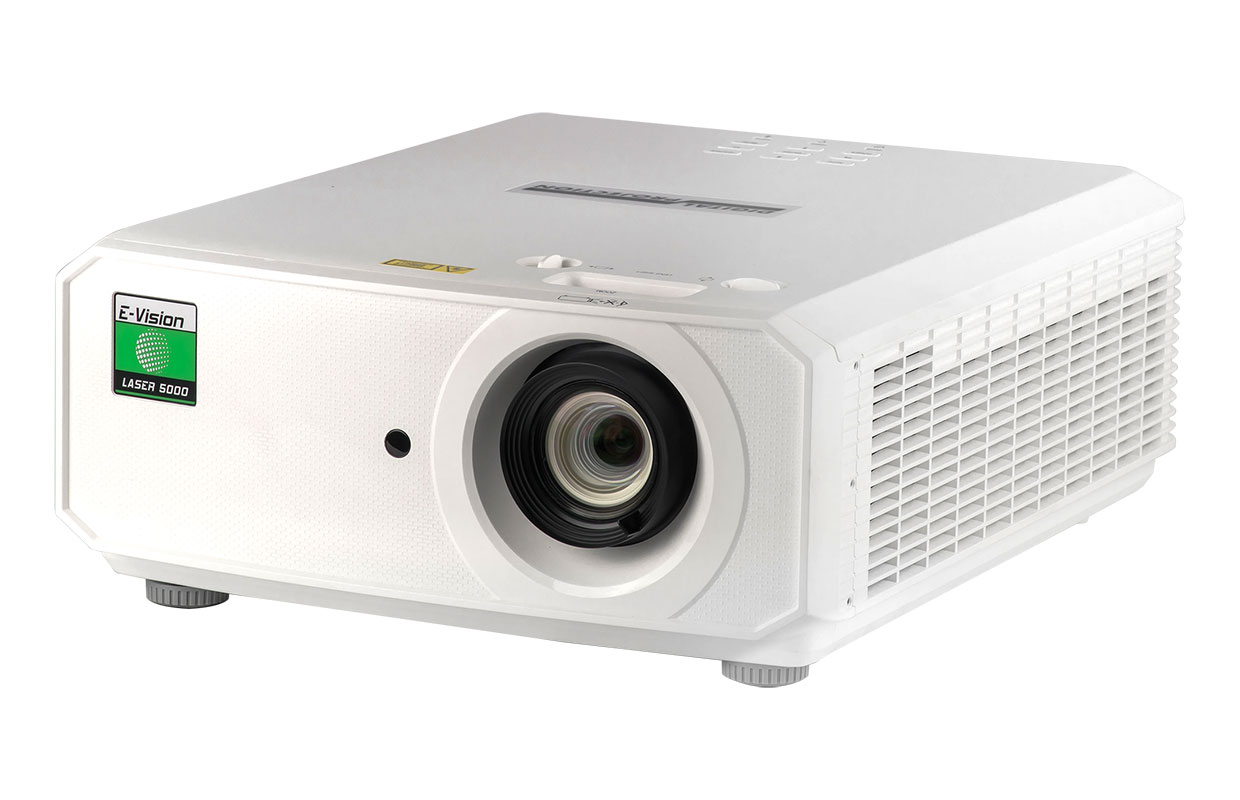
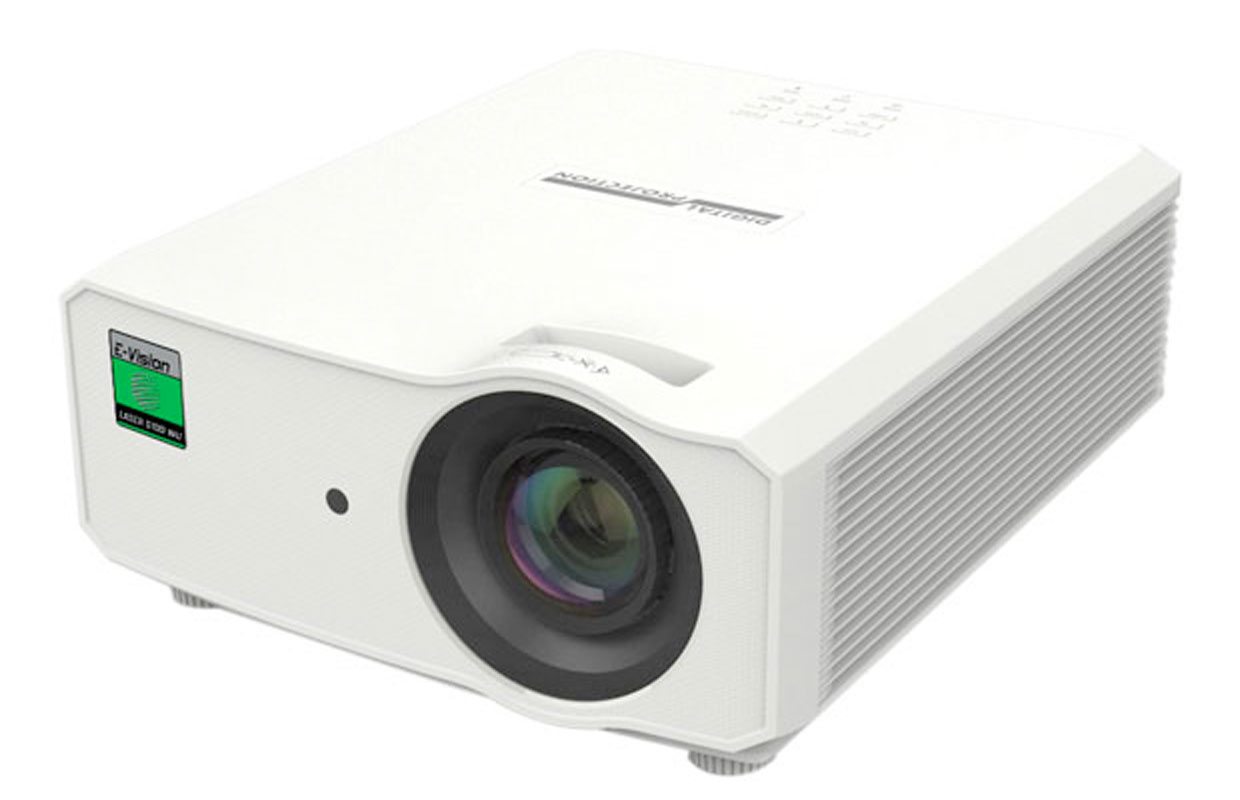
dVision 1080p – The next generation of display technology from DPI. 1920 x 1080 native resolution, 6000:1 contrast, 2,500 ANSI lumens, ultra quiet operation, wide array of lens options. Suited for business, engineering, immersive visualization and of course, dramatic home cinema applications.
DVision XG – Single-chip XGA (1024 x 768) resolution, 6000:1 contrast, 4,500 ANSI lumens. Suited for use in a range of business, education and religious applications.
CinemaScope™ Package – For the ultimate home theater experience. An anamorphic ISCO lens and motorized sled for use on our dVision and Mercury series projectors, allows viewing of content in a 2.35 aspect ratio. No more black bars!
New Lower Prices!
HIGHlite Pro series
Mercury 5000 HD
Dealers and reps, please log in to your access page to download DP's most current pricing, dated February 16, 2006. End users and consultants, please email DPI marketing communications if you would like to receive a copy of our current list pricing.
Designing for a True Cinema Experience – DP's Anamorphic Cinemascope™ System for Mercury and dVision Projectors
The initial pre-production Mercury anamorphic lens sled adapter has arrived and passed all tests with flying colors!! When combined with an ISCO 1.33 anamorphic lens, the sled allows a standard 1.78 native display (1280 x 720 pixels) to make 2.35 aspect ratio images. We have appropriately named the combination DP's CinemaScope™ System.
The majority of movies being released on DVD are captured in the original “scope” format. When these DVD's are viewed on a standard 16X 9 display, the movie is “letterboxed”. Nothing is more annoying than losing 25% of your new 16X9 screen to black bars! DP's new CinemaScope™ option is designed to work with “constant” height screens. By increasing the width of the screen to match the 2.35:1 aspect ratio, the overall image area is increased by 33%, providing a much more dramatic viewing experience just as the movie producer desired.
First, let's discuss how the CinemaScope™ system works. DP's anamorphic sled is designed so the projector always operates in standard 1.78 mode (16X9) whether the lens is in the “out” position, or “in” position, which is required for the display of 2.35 content. A quiet motor drives a threaded shaft, moving the high quality anamorphic lens into the precise location in front of the projector's primary lens. When accurately positioned, the anamorphic lens stretches the image by a factor of 1.33.
Since 2.35 film content is captured in a letterbox format on the DVD, when used with the CinemaScope™ System, it must be vertically stretched to fill the full 1.78 format of the projector. Excluding the impact of the anamorphic lens, this will create circles that appear vertically stretched or egg shaped. With the anamorphic lens engaged, the “eggs” are again stretched, but this time horizontally, to become proper circles again.

For the viewing of standard 1.78 content or HD broadcast material, the sled places the anamorphic lens in the “out” position, and the projector operates in it's normal 16 x 9 mode, producing an image with the same height as the 2.35 image. Just as in a commercial cinema, side-masking panels can be employed on the native 2.35 screen, or traditional drapes can be drawn to create a clean 16 x 9 image area. When a CinemaScope™ movie is played, the sled accurately places the anamorphic lens in the “in” position, the curtains or panels are pulled back and the electronics are set to vertically stretch the letterbox image to fill the full area of the DMD. The result: a dramatic reveal of a 2.35:1 aspect screen, producing stunning imagery as well as clients who are both blown away by the experience, and beaming with pride over their new state-of-the-art system.
Back to the practical points, let's discuss how to calculate throw distance for a 2.35 aspect ratio screen using DP's CinemaScope™ system.
First, examine your screen height. If your screen is 60” tall (5'), the 1.78 image width would be 8.9' or 106.8”. If your throw distance is 25' (300”), then the lens ratio calculation would be 300” / 106.8”, which equals a 2.8:1 throw ratio.
Maintaining a constant screen height of 60”, in the 2.35 mode (through the CinemaScope™ System) the screen width would be stretched to 11.75' (141”). Notice again, that everything is still sized for the native 16 x 9 mode, but due to the anamorphic lens, the image “grows” horizontally by a factor of 1.33X to fill the 2.35 screen. As an added point, 4 x 3 content is displayed at the same 60” height, and is mapped by the projector to use the middle 4 x 3 patch of the 16 x 9 chip. The CinemaScope™ system would be in the lens “out” position for 4 x 3 sources. Using the screen example above, the resulting 4 x 3 image would be 60” x 80” wide.
So to review the example above, with constant screen height:
Standard definition TV (4 x 3) is 60” tall and 80” wide.
When high definition content is selected (16 x 9), the image grows to 60” high and 106.8” wide.
When CinemaScope™ movies are selected (2.35:1), the image grows to an amazing 60” tall by 141” wide.
This creates a very immersive, even interactive display, through a slick and automated system.
Since native 2.35 DMD's or LCD's are not likely to exist in the near future, DP's CinemaScope™ solution is clearly the best and most efficient way to enjoy movies in the native cinemascope presentation that Hollywood intended. DP currently offers the CinemaScope™ lens and sled system for the dVision HD, the dVision 1080P and Mercury HD and 5000HD projectors. In the future, you can expect new CinemaScope™ System solutions for DP's iVision HD, iVision 20HD and perhaps other projectors as well.
Digital Projection products displaying movies in the native format, as they were created, and benefiting from the full resolution and efficiency of the DMD technology – just one more reason why Digital Projection truly is “Hollywood's Home Cinema.”
CinemaScope™ is a registered trademark of 20th Century Fox Film Corporation
Photo of the Month |
![]() |
| Keith Frey and his wife Jackie celebrated the birth of their first child earlier this year and would like to introduce Sebastian Frey to all of our DPI customers and colleagues. |
Matching Demand to Supply - A Word About Product Availability
With a diversity of products ranging from $7,000 to $130,000, there is no doubt that Digital Projection is uniquely capable of matching our customers' applications to the perfect projection solution. Offering such an impressive array of projection systems requires that DP fully understand the projection needs of a variety of customers and unique markets. It also demands that DP be adept at predicting our customers' purchasing mix as well as market trends.
With the input of our customers, DP creates monthly forecasts, which predict the short and long-term market demand for our products. The accuracy of these forecasts is vital to our business and production planning. If you are a DP dealer, you are probably familiar with our monthly forecast requests, and you certainly understand that to a great extent, the timely availability of our products depends on the collective forecast feedback of our dealers and manufacturers reps.
Even with good forecast data, product lead times are sometimes impacted by variables beyond our direct control. Component supplier delays, unexpected lapses in component quality, un-forecasted business opportunities, freight carrier delays, even acts of God, all wreak havoc with our plans to meet our delivery commitments to our customers. Although we have many challenges testing our systems, in most cases, DP is able to ship projector orders within 1-4 weeks of the date the order was received. We endeavor to hold reasonable inventory on our shelf, while backing that up with additional product that is always in production.
To keep our customers apprised of our current product availability, every month, DP provides our Manufacturers Representatives with a written Product Availability Update, which details the current “Delivery ARO” for each product in our lineup. If any DP dealers have not seen this monthly report, please ask your DP RMDM or your DP Manufacturer's Representative to add you to their distribution list.
While we are on the subject of product availability, we should address the current backlog situation that exists on our hugely successful Mercury HD series products. About 6 months ago, when we realized the demand for these products was consistently exceeding our forecast expectations, DP took major steps to increase our production. Indeed, we have more than doubled production and we are now shipping record numbers of Mercury HD, 5000HD and 5000gv projectors each and every month. Unfortunately, while our Mercury HD series production output has increased, our new orders have also increased, but at an even faster rate (again, far exceeding forecasts). Thus, we are still in a backlog situation. We are currently quoting 4-6 week delivery on Mercury HD and 5000HD products.
Of course, DP is committed to matching our Mercury production to meet the still increasing demand for the chassis. In the short-mid term, we simply ask that whenever possible, please place your Mercury HD and 5000HD orders well in advance of your installation timeline. This will allow us to build your requirement into our production planning, so we can be sure we meet your delivery needs.
Here is a quick Product availability Summary as of late February, 2006
| iVision series | 1-3 weeks ARO, depending on lens |
| iVision 20 series | New products, small backlog, 2-4 weeks ARO |
| dVision XG, HD and SX+ | 1-3 weeks ARO depending on lens |
| dVision 1080P | New product, First shipments commence April |
| Mercury Series | GV - 3-5 weeks ARO, HD & 5000HD - 4-6 weeks ARO |
| TITAN 6000sx+ | New product, First shipments commence April. |
| HIGHlite Pro sx+ series | 1-3 weeks ARO |
| HL Pro HD series | Custom order, Call for delivery quote |
| Lightning 35HD /35HD-T | 2-3 weeks ARO |
| Lightning 30sx+ | Small backlog – new orders 3-5 weeks ARO. |
EH Expo
Conference March 28 – April 1 st ,
Exposition March 30 – April 1 st
Come see Digital Projection at this year's EH Expo show and conference in Orlando March 28 – April 1, 2006. EH Expo, the semi annual event sponsored by Electronic house magazine, is offered in the spring on the East Coast, and in the fall on the West Coast. Historically it has targeted a more regional audience than the well-known CEDIA exhibition, but it's grown every year and is turning into an excellent compliment to CEDIA.
With over 350 companies exhibiting at EH Expo in Orlando, and an anticipated attendance of over 10,000 people, this will be the largest east coast gathering of custom electronic experts to date. Everyone from architects and builders to retailers and IT professionals attend the EH Expo. The products on display will range from high-end home theaters and automation, to specialized lighting control and security systems.
This will be the first year that Digital Projection will exhibit at the spring show. DP will share booth space with Acoustic Innovations, Screen Research, APC, and JBL. This collaborative activity, orchestrated by our mutual rep firm, MCS Marketing, will allow all 5 participants to construct a fully operational home theater with the latest high tech gear and innovative designs. Even more exciting, DP will use this event as the first formal showing of our new dVision 080P. Look for our EH Expo wrap-up and photos in future newsletters.
Tech Tip: Compensating for and Minimizing Video Delay
Video delay, also called frame delay, is a result of the amount of time needed to process a video signal by electronic components. In general, there will always be some amount of delay that is inherent in even the simplest video system. This delay can occur at any processing point in the video path, and the amount of delay created by different system components varies. By comparison, the audio signal that accompanies video content is generally a much smaller bandwidth signal and is not subjected to complex processing, so very little audio delay is created.
In most cases, where simple video processing electronics are employed, the video delay is not noticeably greater than the audio delay; thus, the viewer observes no delay impact. In other cases, where complex video processing or signal distribution is occurring, the delay can add up to a number of frames, which is more than enough to create a noticeable, non-synchronous presentation of audio and video.
Causes
So what causes increases in video delay? As one example, employing warp electronics to apply geometric correction to an image can result in noticeable increases in video delay. Another contributing factor can be the use of a scaler or a signal processing that performs video noise reduction. Video delay can also occur in applications where very high bandwidth 3D images are being processed. All of the aforementioned electronic capabilities can be found in both projectors and external processing components. The primary question to answer remains: is the sum delay of all the video processing and distribution enough to cause a noticeable time difference between the audio and the video?
Effect
The symptom of video delay is that the video information lags behind the audio information. In simple terms, video and audio become unsynchronized. In cases where live camera shots support an on-stage speaker with magnified video projection (also known as IMAG), one might also notice that the speaker's movements on the projection screen lag behind what the presenter is actually doing.
Solutions
When significant video delay is unavoidable in a non-live presentation system design such as a boardroom or a home theater, the simplest solution is to intentionally delay the audio to resynchronize it with the video. In many cases, this audio delay is accomplished with equipment specifically designed for that task. As an example, Digital Projection's VIP 1000 source switcher/image processor offers a user-adjustable audio delay circuit that is very effective.
In live events with IMAG, such as concerts or religious applications, the viewers are observing the same activity on stage that is being projected and heard. In that scenario, if audio delay is employed to match the video delay of the system, the audio and video will be synchronized, but there will not be synchronization between what the viewers simultaneously observe - the live action compared to the IMAG action. The best solution to the live event challenge is to minimize video delay in the design of the video system. Minimizing video delay normally means employing as few distribution components as possible and keeping image processing, warp correction and signal processing to the bare bones of what the application demands. Avoid multiple analog to digital conversions and never use more than one scaler in the video path. Be sure to remember, many projectors include built-in scalers, so if you are using external scaling electronics, the projector's scaler should be set to native. Also, distributing digital video “end-to-end” throughout your entire signal path will help assure the integrity of your signal quality.
Conclusion
Due to the nature of how electrons move through electronic devices, there will always be some element of delay in any video system design. In certain applications, image processing such as geometric warp is an absolute requirement, so it is best to plan ahead and consider if audio delay can provide a good solution. Most video processor and projector manufacturers can provide data defining the video delay characteristics of their products. It is normally described as “lines of delay,” which have minimal impact, or frames of delay, which is much more significant. You should always understand the delay characteristics of each component within your systems so you can estimate the approximate video delay any system design will introduce.
Digital Projection can provide the video delay specifications for all of our projectors and we are eager to support designers in their application needs. As always, we stand ready to help our customers create the worlds most magnificent large screen solutions.
DP Employee News
The newest feature in our monthly newsletter spotlights DP employee news and special occasions. The following associates are celebrating anniversaries with DPI in February. We'd like to take this opportunity to introduce you to these members of the DP team and thank them for their commitment to the company and our customers.
8 Years
Mark Fuell - Service Manager
Mark's dilligence and experience in quality control is evident in every projector we ship. As manager of QC, Mark and his team of expert technicians pass each projector through a rigorous testing process to ensure that every DP product meets or exceeds our specifications. Mark is also one of DP's music on hold DJ's. So if you ever experience rowdy music when calling into DP, we have Mark to thank.
2 Years
Jason Woodall - Warehouse Assistant
Jason works with the warehouse team to ensure all outgoing and incoming shipments arrive on time and are delivered to the right people. Jason is a motorcycle enthusiast and is also considered our resident gaming expert as he frequently masterminds team lottery entries to keep things interesting around the office.
Tech Tip Archive
October 2004
November 2004
December 2004
January 2005
February 2005
March 2005
April 2005
May 2005
June 2005
July 2005
CEDIA 2005
October 2005
November 2005
December 2005
January 2006
Photo of the Month Archive
December 2004
January 2005
February 2005
March 2005
April 2005
May 2005
June 2005
July 2005
CEDIA 2005
October 2005
November 2005
December 2005
January 2006
Newsletter Archive
October 2004
November 2004
December 2004
January 2005
February 2005
March 2005
April 2005
May 2005
June 2005
July 2005
CEDIA 2005
October 2005
November 2005
December 2005
January 2006