close

Digital Projection lights up the Kilden Performing Arts Centre

Kilden Performing Arts Centre, in Kristiansand, Norway, is one of the Nordic countries’ most exciting environments for professional performing arts and music. Home to the Kristiansand Symphony Orchestra, Kilden Theatre, Kilden Opera, and Kilden Culture, the centre brings together an unprecedented range of events and content under one roof.

Given the huge variety of programming that comes through its doors, from concerts and comedy to opera and theatre, the centre required a flexible, modular projection solution to enhance its visual capabilities. Awarded the project via public tender, Bravida, one the Nordic region’s leading providers of end-to-end installations, provided a turnkey solution, delivering, installing and configuring the equipment.

Digital Projection lights up the Kilden Performing Arts Centre

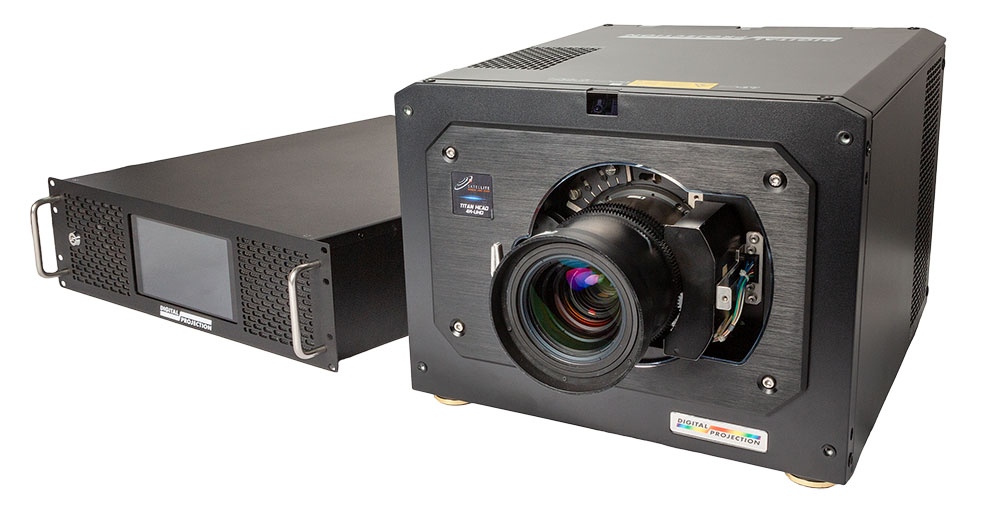
At the heart of the installation are two identical TITAN 4K RGB laser projectors, located in the venue’s Concert and Theatre Hall, each powered by Digital Projection’s Satellite Modular Light System (MLS). Installed on three rack-mounted modules, the Satellite TITAN system delivers uncompromising image quality and operational flexibility while meeting the stringent acoustic and redundancy requirements of the venue.

The projectors deliver approximately 10,000 ISO lumens of brightness, which are optically combined into a single cable feeding the projector head. This results in a total output of around 26,000 ISO lumens per projector. This modular configuration provides significant operational redundancy – if one light source were to fail, the system can typically continue running with low impact. This level of fault tolerance was important, ensuring high reliability and minimal downtime in a demanding live-performance environment.

Digital Projection lights up the Kilden Performing Arts Centre

To address Kilden’s strict acoustic requirements, and aligning with the venue’s strict space limitations, Bravida opted to take advantage of the Satellite Modular Laser System, which allows the noise-generating components to be installed in separate control rooms, leaving only the projector heads within the performance spaces. This approach significantly reduces ambient noise levels while maintaining brightness and image fidelity.

The modular design of the projection system offers significant operational benefits. Components like lenses, light sources and heads can be easily swapped between the two venues, minimising disruption in case of component failures. This flexibility is particularly valuable for Kilden as a high-demand venue fit for purpose for a wide variety of content – from concerts and stand-up to art installations, films and theatre productions.

Digital Projection lights up the Kilden Performing Arts Centre

Bravida supplied the core projection system and signal cabling, while Kilden’s in-house technical team managed signal routing and integration. The venue’s existing infrastructure, including camera sources and a central video mixing system, forms the backbone for content delivery. The system can accommodate live production as well as playback of pre-produced content, including video, presentations and projection mapping. Service manager at Bravida, Audun Kolstad, explains the choice behind selecting Digital Projection’s products for the installation, saying: “Digital Projection played a crucial role throughout the project, providing technical guidance during planning and delivering end-user training to ensure a seamless handover to Kilden’s staff. Their expertise helped shape a solution that precisely aligned with the tender’s performance and design specifications.”

Digital Projection lights up the Kilden Performing Arts Centre

He gives an example of this expertise, explaining that as throw distances and optical needs changed during installation, Digital Projection supplied extra lenses to maintain flexible coverage, allowing team to tailor projection setups for different events and requirements.

Reflecting on the renovation, Kolstad concludes: “This project reflects how modern modular projection systems can meet the demanding needs of a national cultural venue. With its high brightness, exceptional image quality, quiet operation and built-in redundancy, the Digital Projection solution empowers Kilden Performing Arts Centre to deliver immersive visual experiences across a wide range of artistic disciplines”.

Digital Projection lights up the Kilden Performing Arts Centre

Product mentioned in this case study: TITAN MLS 4K-UHD projector

  • Seperate light source from projector head
  • Up to 26,000 ISO lumens
  • 4K-UHD Resolution
  • Just 39dBA of “noise”

Satellite Modular Laser System (MLS) offers a small number of simple building blocks that allow users to address a wide range of applications, from single projector installs to complex, multi-channel domes, caves and simulators. Where RGB laser illumination used to be the preserve of only very high-end applications, the Digital Projection Satellite MLS system will make this technology accessible to the wider AV market, at a cost-effective price point.

Find out more

Digital Projection and Manganelli deliver state-of-the-art auditorium installations in historic Rennes

Two of Rennes’ most prestigious cultural and conference venues have recently been upgraded with cutting-edge projection technology from Digital Projection, enhancing their ability to deliver immersive, high-quality visual experiences.

Spearheaded by Lille-based system integrator Manganelli, the twin installations – at the Couvent des Jacobins and Les Champs Libres – reinforce the Breton capital’s reputation as a leading destination for events, conventions and multimedia exhibitions.

Located at the heart of Rennes’ cultural and artistic landscape, Les Champs Libres is a multidisciplinary venue housing a library, museum and science centre alongside its conference facilities. To support its diverse range of events, Manganelli integrated a Digital Projection’s TITAN Satellite Modular Laser System (MLS) boasting 20K lumen and 4K resolution. By allowing the integrator to separate the noise and heat-producing light source from the projector head, the award-winning modular MLS system enables greater installation flexibility, reduced noise levels and enhanced thermal efficiency.

State-of-the-art auditorium installations in historic Rennes

“The goal was not to have the video projector in the control room, but to place it in the auditorium. In order not to disturb the spectators in the auditorium, we opted for the Satellite solution, which only allows us to place the head – which doesn’t make any noise – in the auditorium, and the RGB laser source in the technical room,” explains Stéphane Bourdon, Digital Projection’s regional sales manager for south-western Europe.

Dewi Seignard, the auditorium FOH manager at Les Champs Libres, confirms: “We did a number of tests with other brands and the Satellite technology was the only one able to answer our needs for a very powerful projector without any of the usual inconveniences, such as noise, heat or a massive cabinet. 4K compatibility was another deciding factor, as well as colour reproductions. We are also thankful to Stéphane Bourdon and his team for their availability and support during and after the integration phase”.

State-of-the-art auditorium installations in historic Rennes

Situated a stone’s throw away from Les Champs Libres, the Couvent des Jacobins is a landmark of Rennes’ architectural heritage. It was converted into a congress centre in 2018 after undergoing extensive modernisation while retaining its historic charm. Within its 1,000-seat auditorium, Manganelli installed a Digital Projection TITAN 33000 4K-UHD projector to provide unparalleled image clarity, brightness, and colour accuracy for conferences, performances and presentations. The original plan was to use the TITAN in La Nef, a smaller 400 seats auditorium in the congress centre, but after being impressed by the performances of the projector, the end user decided to use it for the main auditorium, demoting the existing projector to the smaller venue.

State-of-the-art auditorium installations in historic Rennes

“We chose Manganelli following a public tender last year, and the company exceeded our expectations in terms of equipment quality and prices, but also in terms of sustainability commitment, which was particularly important for us as an ISO 20121 certified company. Customer service was also a significant advantage in this constructive relationship. We’ve been using the equipment for months and we are completely satisfied”, explains Laurent Knobloch-Bard, production manager at the Couvent des Jacobins.

From a compact chassis, the powerful TITAN Laser 33000 delivers up 31,000 lumens at 4K resolution, making it the ideal projector for the most demanding of large-venue applications. The 3-chip DLP® TITAN Laser 33000 offers connection options including DisplayPort, HDMI 2.0 and HDBaseT, while its advanced electronics also bring HDR processing to the large-venue class of projectors. Features such as Constant Brightness Control and DMX Art-Net compatibility make it the ideal solution for high profile events and fixed installations, with the class-leading 3 chip DLP projector also benefiting from features such as Non-linear Warp, Geometry Correction, Edge Blending and Picture in Picture as standard.

State-of-the-art auditorium installations in historic Rennes

Digital Projection’s relationship with Manganelli proved instrumental in successfully completing both projects. Yannig Morice, sales engineer at Manganelli, confirms: “The level of support from Stéphane Bourdon and his team was excellent, both before and during the installation phase. They provided an unbeatable package in terms of performance and price, which really helped us to secure both projects. For the Couvent des Jacobins in particular, the low environmental impact of the projector and the overall ease of integration were crucial, and both conditions were perfectly met by Digital Projection.”

State-of-the-art auditorium installations in historic Rennes

Product mentioned in this case study: TITAN 33000 4K-UHD projector

  • IP60 Sealed Optics
  • 3 x 0.96” DarkChip™ DMD™
  • 4K-UHD Resolution
  • 18,000:1 Contrast Ratio

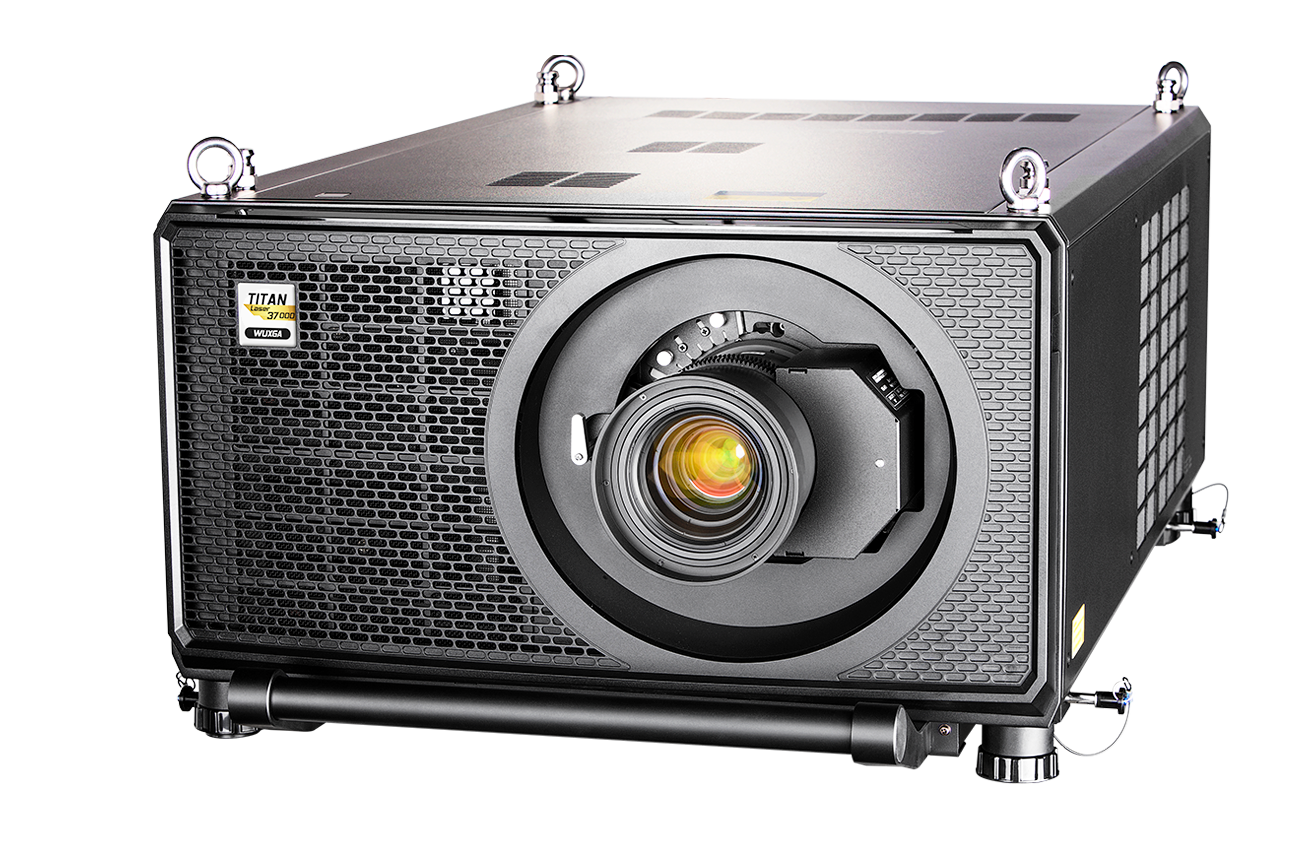
The powerful Titan Laser 37000 delivers up to 37,000 (WUXGA) or up to 31,000 (4K-UHD) Lumens from a relatively compact chassis, making it the ideal projector for the most demanding of large-venue applications. Where bright, pin sharp images are required there should be no compromise.

This class-leading 3-Chip DLP projector utilises the very latest in connectivity, including DisplayPort, HDMI 2.0 and HDBaseT. The advanced electronics also bring HDR processing to the large venue class of projectors, and features such as Constant Brightness Control and DMX Art-Net compatibility make it the idea solution for high profile events and fixed installations.

Find out more

Satellite MLS steals the show in Le Mime et L’Étoile

Digital Projection’s paradigm-shifting Satellite Modular Laser System (MLS) is taking a starring role in Le Mime et L’Étoile – a new theatrical spectacle that uses cutting-edge AV technology to transport audiences back to the Belle Époque at the famed French theme park Puy du Fou. The show already scooped a number of international accolades including Most Creative Theatrical Production at the IAAPA Honors 2024 and Best New Show at the 2023 Golden Ticket Awards.

A celebration of the birth of cinema, Le Mime et L’Étoile (The Mime and the Star) puts the audience behind the camera, taking guests on a kaleidoscopic journey through the evolving art of filmmaking – from silent to talking pictures, and from black and white to colour – with a love story set against the backdrop of pre-war France. As audience members become part of Le Mime et L’Étoile’s show within a show, featuring screen star Garance and the gypsy mime Mimoza, they experience the artistic and technical breakthroughs that characterised motion pictures at the dawn of the 20th century.

Satellite MLS steals the show in Le Mime et L’Étoile

A technical as well as narrative masterclass, Le Mime et L’Étoile utilises countless costumes, mobile props and stage effects – as well as, most spectacularly, a moving stage that gives the impression of the 30-minute show being one long tracking shot – to faithfully recreate the aesthetics of a period movie – one in which the 2,000 spectators present in the purpose-built auditorium are participants, seeing the film from the ‘inside’ as it progresses from era to era. “The artistic approach to Le Mime et l’Étoile is radical. The idea is to offer our visitors a new and unexpected historical experience,” explains a Puy du Fou representative who worked on the project. “What could be more immersive and original than shooting a film in black and white? This is the major artistic and technical challenge of this show: the stage, its sets and its actors instantly turn into black and white, transporting visitors into the story.”

Satellite MLS steals the show in Le Mime et L’Étoile

To create this illusion, Puy du Fou’s in-house technical team relies on a state-of-the-art AVL set-up featuring projection mapping, lighting and spatialised sound, synced in real time with the movements of the sets and characters on stage.

The mainstays of this system are four Digital Projection Satellite MLS INSIGHT 4K laser projectors, installed discreetly at the back of the Le Mime et l’Étoile auditorium. The INSIGHT 4K projectors gave the in house technical team the ability to transition seamlessly between colour and black and white scenes, the lighting designer leveraging the superb colour accuracy and black levels offered by Digital Projection’s ColorMax™ technology to convey the transition from silent movies to modern cinema using precise video pixel mapping and subtle shades of ‘grey’ colour mixing.

Satellite MLS steals the show in Le Mime et L’Étoile

Part of Digital Projection’s flagship INSIGHT range, the INSIGHT 4K laser projector combines native 4K (4096 × 2160) resolution with a light output of up to 40,000 ISO lumens and a contrast ratio of 2,000:1. In Satellite MLS format, the INSIGHT 4K’s lightweight (40kg), virtually silent projector ‘head’ can be decoupled from a separate, completely hidden laser light source (remotely installed up to 100m away), allowing for ultra-bright images while minimising the physical impact of the projectors.

For the Puy du Fou technical team, the ability to easily disguise the projector infrastructure was key for the show, with the aim to minimise the intrusion of modern technology into the show historic story: As a result, the technical and AV element serve the show, and visitors can be enchanted by the experience without even noticing the technical prowess behind the show.

Satellite MLS steals the show in Le Mime et L’Étoile

“Due to the thousands of people coming in, there is a lot of dust, and these projectors can stand up to that – plus they don’t run too hot, and the laser source is protected. This brings peace of mind as we know they will run smoothly for a very long time.”

Puy du Fou is also impressed by the projectors’ reliability and durability, given the demands of Le Mime et l’Étoile, which is performed multiple times a day. “The projectors are used very heavily,” says a technical team representative. “Due to the thousands of people coming in, there is a lot of dust, and these projectors can stand up to that – plus they don’t run too hot, and the laser source is protected. This brings peace of mind as we know they will run smoothly for a very long time.”

Satellite MLS steals the show in Le Mime et L’Étoile

A Modulo Pi media server completes the video set-up, while a spatial sound system makes audio objects appear to come from all corners of the 4,000m² Le Mime et l’Étoile theatre.

Real-time synchronisation of the AV and lighting is made possible by Naostage’s automated show control solution, K SYSTEM, which – by automatically tracking the production’s 16 main actors and dancers – enables fully automatic lighting, audio and video effects synchronised with the staging. This is a crucial element of the show, but one that would be nearly impossible for a human operator to achieve. The technical team behind the show explains that it would be unworkable to track Le Mime et L’Étoile’s intense action manually, which features more than 120 actors and a 140 tonnes décor that constantly moves throughout the half an hour show: “It would be extremely complex without Naostage,” they explain. “All the actors come and go from the stage very quickly, and the theatre set is in constant movement. If we had to do it manually, that would be crazy – it would simply be exhausting.”

Satellite MLS steals the show in Le Mime et L’Étoile

Following the successful debut of Le Mime et L’Étoile, whose INSIGHT 4K projectors deliver 20,000 lumens of brightness apiece, Digital Projection supplied a further nine projectors – this time in even brighter 40,000-lumen format – to Puy du Fou for another attraction, Le Dernier Panache. Charting the fortunes of a French naval hero in the late 18th century, the multi-award-winning Le Dernier Panache takes place across an immersive 360° stage set in the park’s 7,500m² Théâtre des Géants (Theatre of Giants), where 8 × Digital Projection INSIGHT 4K 120Hz (40,000 lumens) are helping to bring the story of François de Charette to life in spectacular fashion. The eight INSIGHT 4K 120Hz projectors, plus a spare, replace the original projectors installed ahead of the show’s opening in 2016.

Satellite MLS steals the show in Le Mime et L’Étoile

Product mentioned in this case study: INSIGHT MLS

  • Up to 40,000 ISO Lumens
  • Native 4K (4096×2160)
  • 2000:1 Contrast
  • 40dBA
  • Modular Light Source (up to 4 modules)

Satellite Modular Laser System (MLS) offers a small number of simple building blocks that allow users to address a wide range of applications, from single projector installs to complex, multi-channel domes, caves and simulators. Where RGB laser illumination used to be the preserve of only very high-end applications, the Digital Projection Satellite MLS system will make this technology accessible to the wider AV market, at a cost-effective price point.

Discover More

Digital Projection’s innovative, modular Satellite Modular Laser System (MLS) has found a new home in Munich’s historic Gärtnerplatztheater, one of the busiest opera houses in Germany.

Specified by the Gärtnerplatztheater’s head of video, WE ARE VIDEO’s Raphael Kurig, and provided by Digital Projection’s German partner ETHA, the new projector system is supplied in TITAN Satellite MLS form, with three light-source modules per projector providing 26,000 ISO lumens’ illumination at 4K-UHD resolution.

With two TITAN Satellite MLS projectors installed front and back in the theatre, the result is, Kurig says, “super bright” – but at the Gärtnerplatztheater, an even more important factor is Satellite MLS’s unique, ‘building-block’ design, which makes it the only solution that ticks all the boxes in the challenging 19th-century space.

“Working in a heritage building like the Gärtnerplatztheater, space is always at a premium, but the demand for higher brightness often leads to bigger, heavier projectors unsuitable for venues such as ours. It was clear that when it came time for a projection upgrade, Satellite MLS, with its unique modular design, was the only solution on the market that fit our needs.”

WE ARE VIDEO’s Raphael Kurig

With two TITAN Satellite MLS projectors installed front and back in the theatre, the result is, Kurig says, “super bright” – but at the Gärtnerplatztheater, an even more important factor is Satellite MLS’s unique, ‘building-block’ design, which makes it the only solution that ticks all the boxes in the challenging 19th-century space.

First opened in 1865 and remodelled extensively in 1945–1948 and 2012–2017, the Gärtnerplatztheater (in full the Staatstheater am Gärtnerplatz, or State Theatre on the Gärtnerplatz) is considered a masterpiece of neoclassical architecture. Today, it is one of the most active theatres in Germany, with a programme that includes operettas, ballet, children’s theatre and more and some 550 full-time staff.

Digital Projection’s Satellite MLS puts in star performance at Gärtnerplatztheater

The Gärtnerplatztheater was formerly equipped with a previous-generation (non-Satellite MLS) quad-lamp TITAN projector, which needed to be replaced after the venue’s lighting department opted to switch to LED lighting. “For video, we now needed at least 26,000 lumens,” explains Kurig, “and while we did try out projectors by other brands, they were consistently too big, bulky and noisy for the dimensions of the theatre.”

Epitomising Digital Projection’s “smaller is better” design philosophy, Satellite MLS combines a compact, lightweight, quiet projector ‘head’ with a separate, remotely installed light source – making it possible to meet the growing demand for brighter, yet smaller and quieter, projectors. Satellite MLS is perfectly suited to environments with space constraints, allowing for ultra-bright RGB laser projection in historic buildings such as the Gärtnerplatztheater, where it would have been impossible to hang bigger, heavier projectors.

At the Gärtnerplatztheater, where the emphasis is on saving space, the light source is also located in the audience area, just 5m from the projector head (with a VICOM Silent case helping to keep noise down) – though in environments where silence is a must (for example, museum exhibitions) the projector components may be separated by up to 100m using a satellite link cable.

“Theatres are some of the most demanding applications for projection, where near-silent operation, and a requirement for ultra-bright projectors that take up the smallest amount of space, are prerequisites,” comments Josef Saller, Digital Projection’s regional sales manager for the DACH region. “The Satellite ticks all these boxes and more, bringing beautifully saturated images from the RGB laser light source and the pinnacle of projection that only DLP technology can achieve.”

Digital Projection’s Satellite MLS puts in star performance at Gärtnerplatztheater

After some early software problems (solved with the assistance of the local ETHA and Digital Projection teams), the TITAN Satellite MLS will make its grand debut this month with a new, video-heavy production of Mozart’s The Magic Flute (Die Zauberflöte), which premieres at the Gärtnerplatztheater on 22 October.

“Working in a heritage building like the Gärtnerplatztheater, space is always at a premium,” concludes Kurig, “but the demand for higher brightness often leads to bigger, heavier projectors unsuitable for venues such as ours. It was clear that when it came time for a projection upgrade, Satellite MLS, with its unique modular design, was the only solution on the market that fit our needs.

“With the premiere of Die Zauberflöte fast approaching, we can’t wait to see what our audience thinks as we put the new system through its paces.”

Photo credit: Raphael Kurig/WE ARE VIDEO

Product mentioned in this case study: Satellite MLS

  • Up to 40,000 Lumens
  • Modular RGB laser light sources
  • Compact projection heads
  • 3-Chip DLP
  • 8K, 4K, 4K-UHD & WUXGA Resolutions

Satellite Modular Laser System (MLS) offers a small number of simple building blocks that allow users to address a wide range of applications, from single projector installs to complex, multi-channel domes, caves and simulators. Where RGB laser illumination used to be the preserve of only very high-end applications, the Digital Projection Satellite MLS system will make this technology accessible to the wider AV market, at a cost-effective price point.

Find out more

Digital Projection deliver true digital collaboration for the University of Liverpool

The Digital Innovation Facility at the University of Liverpool, a new home for academic research into emerging technologies such as autonomous systems, robotics, data analytics and artificial intelligence, has been equipped with state-of-the-art 3D projection equipment provided by ST Engineering Antycip.

Part of the university’s Institute for Digital Engineering and Autonomous Systems (IDEAS), the £12.7 million (€15.2m), 1,500m² Digital Innovation Facility (DIF) comprises multiple research laboratories, immersive visualisation facilities, and work and break-out spaces for academics and collaborative partners. Motion-capture specialist Target3D, which had been commissioned to build two of the DIF’s labs, called on ST Engineering Antycip, a leading global provider of simulation, analysis, modelling, display and virtual-reality solutions, to supply and configure a cutting-edge projection set-up for the mixed-reality laboratory, which houses the UK’s first active stereo projection system capable of rendering multiple unique tracked viewpoints.

Digital Projection deliver true digital collaboration for the University of Liverpool

Robert Jeffries, commercial director for Target3D, explains that the integrator chose to partner with ST Engineering Antycip on the project for its expert “knowledge of complex projection and CAVE [cave automatic virtual environment] installations”.

In order to achieve a result that would enable users of the lab to view their own content, from three distinct perspectives, on a floor-to-ceiling immersive 3D display, ST Engineering Antycip supplied a Digital Projection INSIGHT Satellite MLS 4K HFR 360 projector, part of the company’s Satellite Modular Laser System (MLS) range, with MultiView technology. MultiView, explains John Mould, commercial development manager for ST Engineering Antycip, “ushers forth a capability that VR display solutions have been desiring since they first emerged: the capability to support ‘true’ collaboration within the virtual world. The ability for three individuals to be immersed within the same 3D content, and to navigate freely perceiving the visual corrected to their own eyes, means each user is able to point to the same exact location in space and no longer has to share and follow a primary single user.”

Other ST Engineering Antycip-supplied equipment installed in the mixed-reality lab, which also houses haptic gloves, VR headsets and a purpose-built spatial sound stage, includes two rack-based, 10,000-lumen Satellite MLS modules; three PC-based image generators featuring NVIDIA Quadro RTX 6000 GPUs; a bespoke 5m × 2.63m rear-projection screen; and 30 pairs of Volfoni high-speed 3D glasses.

Digital Projection deliver true digital collaboration for the University of Liverpool

Matt Horwood from Digital Projection explains that the INSIGHT Satellite MLS 4K HFR 360’s unique design, which results in a very compact size, low noise and flexibility solved the logistical challenges presented by the Digital Innovation Facility, which has limited space in the rear projection room.

John Mould illustrates how this works: “Satellite MLS represents a unique opportunity to operate a high-lumens native-4K laser projector without the requirement for 32-amp single-phase power supply to drive the projection system. This is made possible by the non-traditional approach of dissociating the laser light source from the projector chassis so the two can be powered separately, enabling standard mains outlets to feed the projection head unit and the separate laser light modules housed and managed within the equipment rack.

“The benefit of this approach is to reduce the resulting operational noise from the projection system while also removing much of the exhausted heat that requires to be managed. This configuration allows the projection head unit’s physical dimensions to be more compact, addressing different mounting approaches with the full flexibility for orientation.”

Digital Projection deliver true digital collaboration for the University of Liverpool

In addition to working around the shortage of space, a challenge for the ST Engineering Antycip team was the fact the lab is located on the first floor. “The installation had to be achieved within a room space which was not upon a ground floor, and so it was less accessible for the unloading of large solid materials,” Mould continues. “The final room location drove the decision to go with a flexible screen surface that could be transported to the floor level. The end client decided that they required the rear projection space to be physically separated from the main viewing space, which was a decision taken post-contract award to integrate the screen more effectively. Working with all parties, we managed to find a solution extending the mechanical structures and substrates to provide such a partition.”

Horwood says the success of the University of Liverpool project is testament to the versatility of the Satellite MLS system, which is ideal for installations where space is at a premium, as well as multi-sided CAVE set-ups: “I can see a multitude of projects benefiting from Digital Projection’s Satellite MLS, especially three- or four-sided CAVEs (MultiView or standard stereo). The RGB laser source also improves the user experience through better colour saturation and uniformity.”

Similarly, Mould says he is “genuinely excited by the possibilities this type of new technology brings us, as it injects new opportunities for many different markets”: “You could conceivably use the same display real estate for multiple different applications, increasing productivity, or to enable new experiences, such as creating three virtual prototypes or designs which you could switch between as simply as the time taken to swap over the glasses between engineers.

“For entertainment and education,” he adds, “you could create virtual fly-throughs of an existing location but generate three different data sets, each separated by time, and the audience could choose the glasses to instantly see the past, present or to enter the possible future – yet all of these experiences would be delivered to the display surface simultaneously.”

“The Digital Innovation Facility is very excited to be home to Europe’s most advanced large-scale virtual-reality powerwall, which enables multiple participants to simultaneously engage with our visualisations,” adds Dr Simon Campion, virtual reality and immersive environments specialist at the University of Liverpool, who manages the mixed-reality laboratory. “This is absolutely key to the innovative collaborations we facilitate between research and industry across the north west [of England], enabling industry leaders to make clear and informed decisions for improved processes through a collaborative approach.”

Ashley Keeler, technical director of Target3D, comments: “We’re delighted to have been part of the creation of the University of Liverpool’s new Digital Innovation Facility. What it has to offer is world class in terms of the technology and its ability to bring collaborative research to Liverpool. We look forward to returning to discover how the researchers are utilising the labs.”

“It was a pleasure to work with the Antycip team again,” concludes Target3D’s Jeffries. “Their willingness to go above and beyond in what has been a complicated procurement process stood out.”

Digital Projection deliver true digital collaboration for the University of Liverpool

Product mentioned in this case study: Satellite MLS

  • Up to 40,000 Lumens
  • 3-Chip DLP
  • Modular RGB laser light sources
  • Compact projection heads
  • 8K, 4K, 4K-UHD & WUXGA Resolutions

Satellite Modular Laser System

Satellite Modular Laser System (MLS) offers a small number of simple building blocks that allow users to address a wide range of applications, from single projector installs to complex, multi-channel domes, caves and simulators. Where RGB laser illumination used to be the preserve of only very high-end applications, the Digital Projection Satellite MLS system will make this technology accessible to the wider AV market, at a cost-effective price point.

Find out more

Satellite MLS powers Curtin University HIVE

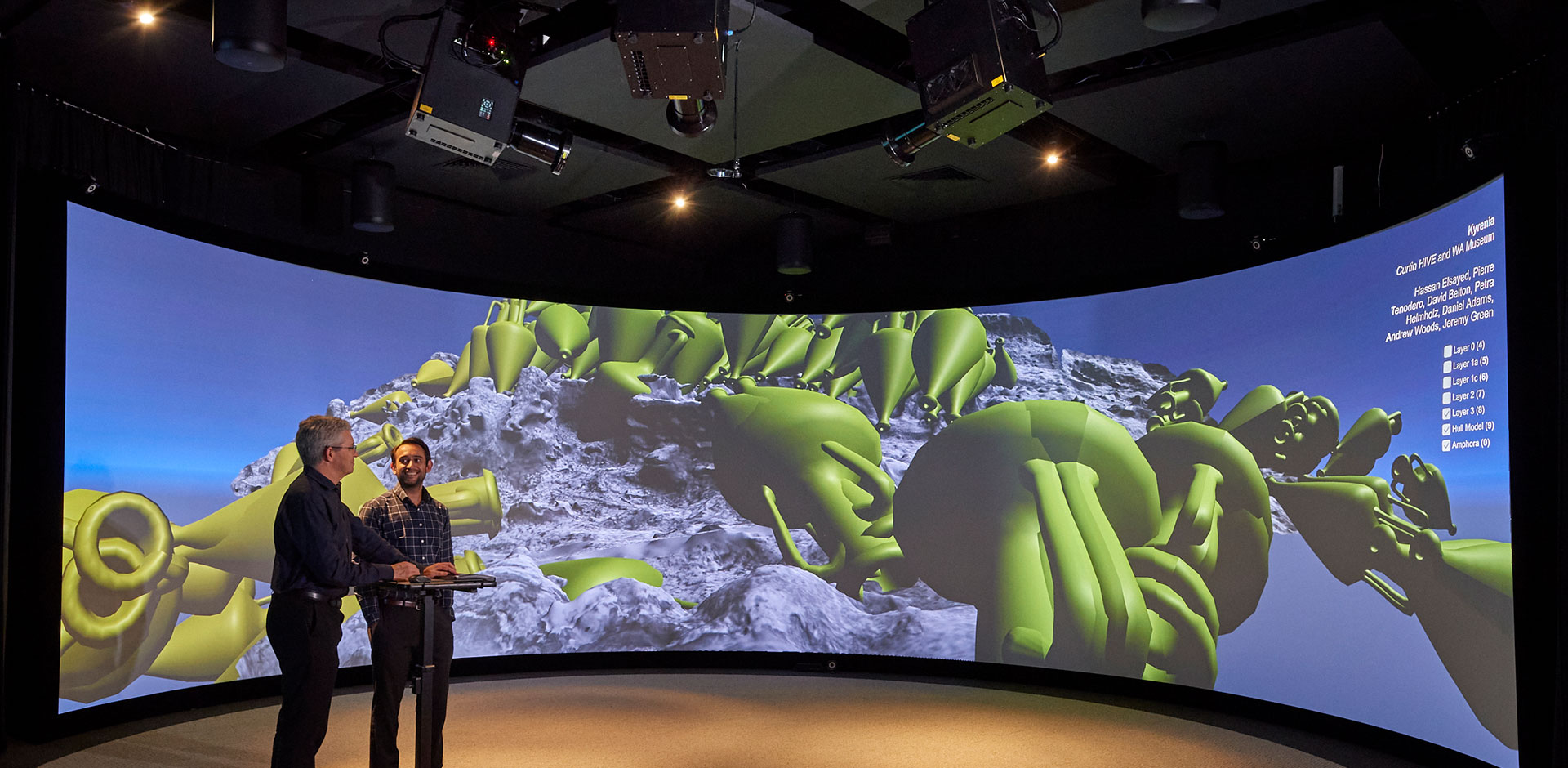
World-leading visualisation hub Curtin University HIVE, whose facilities have supported pioneering research in space exploration, health sciences, education and engineering, recently celebrated another milestone: the world’s first installation of Digital Projection’s cutting-edge new Satellite Modular Laser System (MLS) projectors.

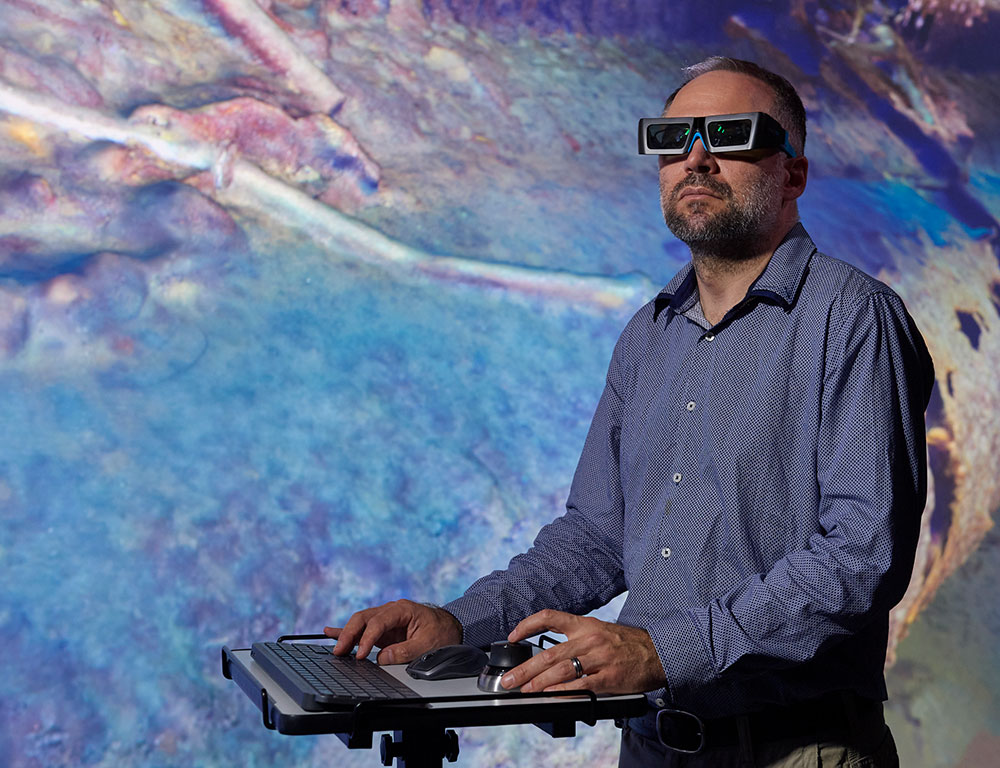
The HIVE (Hub for Immersive Visualisation and eResearch) at Curtin University in Perth, Western Australia, is one of the most advanced visualisation facilities of its kind, and the only one in the world that contains five different large-scale visualisation displays. Its work with technologies such as virtual reality (VR), augmented reality, data and scientific visualisation, photogrammetric 3D reconstruction, and volumetric imaging has been used to, among other things, help patients with spinal cord injuries, investigate consumer behaviour and create virtual experiences of shipwreck sites.

“Essentially, it is a sandbox offering university research staff the opportunity to explore a wide range of visualisation technology options in research projects across all expertise areas,” explains associate professor Andrew Woods, manager of the Curtin HIVE, who also served as the client lead for the upgrade project. “The facility was originally established in 2013, so it was definitely time to update the HIVE AV systems with the latest projection technology,” he adds.

Satellite MLS powers Curtin University HIVE

The display facilities at the HIVE, located in a 15m × 15m former gallery space, comprise the Dome display, a 4m-diameter half-dome which fills a user’s primary and peripheral field of view; the Cylinder display, a wrap-around 3D display providing a VR experience for up to 50 users; the Wedge display, a pair of 3.8m diagonal 3D displays used mainly for scientific visualisation; the Tiled display, which with 24MP resolution is used for super high-resolution visuals; and the Hologram Table, which provides two users with 3D visuals that project out of its tabletop display surface. The upgrade project focused on the Dome and the Cylinder displays.

“The HIVE Cylinder display is the flagship system in the facility,” continues Woods. “The Cylinder display uses three projectors to light a 3m-high, 8m-diameter, 180° cylindrical projection screen. In upgrading the HIVE Cylinder display, in particular, we were keen to increase the display resolution to use native 4K projectors, which would provide a four-fold increase in displayed pixels, and to increase the brightness, all while maintaining the existing 120Hz stereoscopic 3D capability of the display.”

After talking to Digital Projection, the team at InDesign Technologies, the project’s consultant, realised quickly that Digital Projection’s Satellite MLS was the only projection system that met the HIVE’s requirements (full 4K with 120Hz compatibility, and not subject to the exclusion zones that would be necessary with a class-3 laser product) – to the extent that Curtin University was willing to wait for it to come to market rather than compromise by specifying a different system.

“The Digital Projection Satellite Modular Laser System (MLS) was still in development as a technology when discussions commenced,” recalls Tanya Hall, business development manager, integrated solutions, for Amber Technology, Digital Projection’s distributor in Australia and New Zealand. Hall worked closely with Woods, InDesign, integrator Vizcom Technologies, and Emilijo Mihatov, regional sales manager for Digital Projection, to discuss and scope the technology requirements of the project, and VIOSO to develop a solution for the unique requirements of the HIVE Cylinder install.

Satellite MLS powers Curtin University HIVE

Launched last summer, the unique Satellite MLS separates the light source from the small, lightweight projector ‘head’, giving integrators greater freedom, particularly where space and access are restricted, while reducing noise and heat from the audience location. This technology makes high-end RGB laser illumination accessible at a cost-effective price point.

At the HIVE, three Satellite MLS systems are installed in the Cylinder display, with a further system deployed in the Dome display. Taking advantage of the Satellite MLS’s modular nature, which allows up to 100m separation between the projection head and light source, InDesign was able to hang the unobtrusive satellite projector heads at the display sites while locating the light sources around 15m away in a server room containing the other AV and computer equipment.

Satellite MLS powers Curtin University HIVE

“There was a requirement for the projectors to make as little noise impact to the space as possible,” explains Scott Wrightson, project manager for Vizcom Technologies. “This made the Digital Projection Satellite MLS systems invaluable. By having the main laser processor housed in the central comms room it made the operating noise level of the projection heads very low, which in turn suited this project perfectly.”

“The Digital Projection Satellite technology allowed us to meet our needs and more, with a small head size, minimised audible noise from the head – because the light source is in the server room – rich laser-light engine visuals, and cinema-quality three-chip DLP® images, at a reasonable budget point,” adds Woods.

Amber Technology worked with, and were supported by, Digital Projection at a very high level throughout the project timeline, say the Amber team. There were many hours of communication with the Digital Projection team to tap into their expertise on the specification, solution scope and system commissioning. In particular, the Digital Projection team’s insight into how the system would interact with the HIVE’s existing infrastructure was invaluable, they add.

Not that it was always plain sailing – working with such a new technology was bound to bring certain challenges. The projectors required specialist lenses that did not, at that time, have any local distribution representation, so with the help of Emilijo Mihatov from Digital Projection, Amber Technology were able to contact the lens manufacturer and establish a trading arrangement to bring the required lenses into Australia for this project.

Similarly, with the sophisticated blending requirements for the cylinder component of the project, Amber were able to make the connection with VIOSO through Digital Projection and source the blending workstations required.

Satellite MLS powers Curtin University HIVE

Physical mounting positions also proved to be an issue, recalls Wrightson, with a full structural reinforcement required to have the mounting beams in the correct positions for both the Cylinder and Dome displays.

“With this mounting solution also came some environmental vibrations form the building’s HVAC systems,” Wrightson continues, “which was particularly noticeable when using the Jenoptik fisheye lens in the Dome display area, so we had to design and construct a custom lens collar to negate this.”

Richard Neale, Amber Technology’s general manager, integrated solutions, comments: “As the distributor for Digital Projection in Australia and New Zealand, we were excited to be involved in the first installation in the world of this new, cutting-edge technology. For Amber Technology, the HIVE is an important first as we introduce the capabilities of the new Digital Projection Satellite MLS system to the broader market in Australia and New Zealand. The HIVE perfectly showcases the possibilities for projection in new and exciting environments.”

“It has truly been a pleasure in seeing this project come to life,” adds Wrightston, “and I hope I get the chance to work closely with the Digital Projection and Amber team again in the future.”

For the HIVE, the improved AV system is an important step forward for a facility whose work revolves around high-impact visuals. “Ultimately our aim is that the displays in the HIVE are essentially invisible to the user, just providing a window into a different world,” explains Woods. “Our aim is to put amazing visuals on the blank canvas of these displays – visuals that support the applications and research projects that our users come to us with.”

The Satellite MLS more than delivers on that aim, he adds: “Digital Projection worked incredibly hard to deliver a new-to-market product for installation into the HIVE, half-way across the world. Despite all the challenges, the systems are now in and working wonderfully.

“The Cylinder and Dome displays also have much more punch than they previously did, creating high-quality experiences for the HIVE’s users and visitors overall. We are very impressed with the result and already wowing people with the quality of the visuals and the university’s leading-edge research.

Satellite MLS powers Curtin University HIVE

Product mentioned in this case study: Satellite MLS

  • Up to 40,000 Lumens
  • Modular RGB laser light sources
  • Compact projection heads
  • 8K, 4K, 4K-UHD & WUXGA Resolutions

Satellite MLS

Satellite Modular Laser System (MLS) offers a small number of simple building blocks that allow users to address a wide range of applications, from single projector installs to complex, multi-channel domes, caves and simulators. Where RGB laser illumination used to be the preserve of only very high-end applications, the Digital Projection Satellite MLS system will make this technology accessible to the wider AV market, at a cost-effective price point.

Find out more

Digital Projection Propels Visitors into the Data-Verse

Known for his incredible artistic works created from raw data and sound, Japanese visual and sound artist Ryoji Ikeda recently presented the final instalment of his spectacular data-verse exhibition series at 180 Studios, 180 The Strand (London, 20th May – 18th September).

The exhibit – which was curated by Fact and The Vinyl Factory – explored Ikeda’s five years of work on the Data-Verse, which investigates through an audio-visual experience the science of the natural world, via vast data sets conducted by NASA and the Human Genome Project, DNA sequences, galactic coordinates and quantum physics. The event marked the first time the entirety of the data-verse trilogy, all 12 artworks, commissioned by the Audemars Piguet Contemporary, were available to view from one location, with the previous data-verse instalments launched in 2019. Audemars Piguet has been a cornerstone partner in the success of Ryoji Ikeda’s Solo Exhibition in London.


Digital Projection Propels Visitors into the Data-Verse

With the exhibition also featuring a number of never seen before installations, it was even more vital that the works were represented effectively. In order to provide the best visually impactful experience, the projectors used for the project needed to be as high quality at possible to replicate the smallest details in the vast data sets within the artwork. For this, 180 The Strand chose to rely on Digital Projection’s INSIGHT 4K projectors.

“Having worked with Ryoji previously at 180 and for Venice Biennale, we were aware that his work requires the very best and most current technology to work with, hence this choice,” said Neil Thomas, Head Of Production at 180 The Strand & London AV. “We previously ran a test of Data-Verse and could see the 4K’s potential, so we knew it was the right decision.”

Delivering a stunning 27,000 lumens of solid-state illumination at a resolution of 4096 x 2160, Digital Projection’s Insight 4K Laser projectors provide four times the resolution of a standard HD projector. The crystal-clear level of detail was a particular advantage for the Ikeda exhibit, ensuring no detail was missed.

“Ryoji and his studio are very autonomous and thorough in their preparation, which leaves me to concentrate on perfecting the build elements he requires for the artwork,” continued Thomas. Suited to a range of installations, the projectors have the capability to project large, detailed images from just one projector, where previously edge blending 2 or more projectors would have been necessary. With 20,000 hours of illumination from the solid-state laser light source, the INSIGHT 4K Laser boasts an unbeatable efficiency and reliability.

The three projectors were mounted in different places across the studio for maximum effect. One was ceiling mounted, while the others were installed into columns built just for the installation. “The weight of the projectors, the height for installation, and the fact we had to have them inverted for the work were all elements we had to consider in the project,” explained Thomas. “This required us to build the projectors their own columns which we disguised as features of the original building.”

The result of the projector choice and installation efforts was an immersive experience that replicated the intensity of the dazzling works in perfect detail, enjoyed by a reported 85,000 visitors over the course of the exhibition. “We’ve had a tremendous reaction to this work, which is the first time it’s been shown on 3 screens at once,” concluded Thomas.

Pictures credit: ©Ryoji Ikeda – data verse, 180 Studios, 2021. Picture Jack Hems
https://www.180thestrand.com/

Digital Projection Propels Visitors into the Data-Verse

Digital Projection brings Deep Fakes exhibition to life with ground-breaking MultiView 3D technology

In addition to the 21 high-tech artworks and virtual experiences on display, visitors to a forward-thinking new exhibition in Switzerland will have front-row seats for another technological first: the combination of Digital Projection’s Satellite MLS system with MultiView 3D projection technology to help reconstruct Michaelsberg Abbey, a 1,000-year-old Benedictine church in the UNESCO world heritage site of Bamberg, Germany.

Deep Fakes: Art and its Double, which runs until April 2022, is turning heads at EPFL Pavilions in Lausanne with a unique showcase of the emerging digital culture disrupting the art world. From artificial intelligence to computer vision, interactive and immersive media to 3D and 5D printing, technology is revolutionising how art is conceived, created and experienced, and Deep Fakes is the first exhibition to deal with this technological transformation at scale and intensity.

The 1,000m² exhibition is “the culmination of several years of new creative practices emerging from the world of computer science,” explains the exhibition’s curator, EPFL Pavilions director Sarah Kenderdine, who has dubbed these new artefacts, which borrow or build upon existing artworks, ‘cultural deep fakes’. “It was only recently that artists and producers began to fully grasp the potential of computational production and new forms of art,” adds Kenderdine, a professor of museology who has more than 20 years’ experience developing and producing large-scale immersive and interactive exhibitions for museums, as well as world heritage sites throughout Asia such as Angkor in Cambodia and, in Europe, Greece’s Olympia.

Digital Projection brings Deep Fakes exhibition to life with ground-breaking MultiView 3D technology

Among the ‘cultural deep fakes’ on exhibit at EPFL Pavilions, located on the campus of the Swiss Federal Institute of Technology of Lausanne (EPFL), are The Next Rembrandt, which uses artificial intelligence to create a ‘new’ work from the Dutch master, who lived and died in the 17th century; The Golden Calf, by seminal media artist Jeffrey Shaw, which reveals itself only when the visitor has circled around its pedestal in a “dance of veneration”; and Abbey Saint Michel, Bamberg, a complete digital reconstruction of the interior of the 1,000-year-old monastery.

The physical Michaelsberg Abbey has been closed for renovations since 2012, when structural damage was discovered. As part of the restoration process, 3D laser scanning specialist ArcTron was commissioned by the city of Bamberg to create a high-resolution, photorealistic recreation of the church’s interior, which contains significant works of late-Renaissance and Rococo art, sculpture and architecture.

For the Deep Fakes exhibition, the Virtual Reality and Visualization Research group at Weimar’s Bauhaus University and spin-off company Consensive developed real-time rendering techniques for ArcTron’s 3D models, allowing them to be presented in immersive VR using Multi-View, Digital Projection’s multi-user 3D projection technology.

The Digital Projection system in Lausanne, which was also installed by Bauhaus University, comprises one INSIGHT Satellite MLS 4K HFR 360 MultiView projector, along with six pairs of Volfoni-made glasses. Using the ultra-fast frame rates (360fps) unique to Multi-View, this single projector is able to provide a true 3D experience to several viewers, each of whom has a view of the exhibit that remains appropriate to their changing position. This allows the users to see and interact with each other in a truly shared collaborative manner.

“Instead of providing 120 frames per second, which is enough only for single-user 3D, the INSIGHT Satellite MLS 4K HFR 360 delivers an unrivalled 360 frames,” confirms Kenderdine, who says the technology is quite simply revolutionary for heritage experts, in that it can provide everyone viewing a digital artwork with a shared experience. “Giving each user a unique perspective on an object provides us with unpredicted ways to collaborate,” she enthuses.

Digital Projection brings Deep Fakes exhibition to life with ground-breaking MultiView 3D technology

In Satellite MLS (Modular Laser System) spec, the INSIGHT Satellite MLS 4K HFR 360 offers museum professionals an even more compelling solution for modern multi-media exhibitions, explains Digital Projection’s Thierry Ollivier, who is leading the company’s involvement in the Deep Fakes project. With Satellite MLS, the small, lightweight projector head is dissociated from the light source, which allows for bright, 4K projection with a compact footprint and minimal noise/heat generation near the exhibits themselves. This unique design, says Ollivier, makes Satellite MLS ideal for theatres and opera houses, historic buildings, and other heat/space-restricted applications.

Technologies such as Multi-View and Satellite MLS will play an increasingly important role in future art and museum exhibitions, where AV will help immerse visitors in ever-more interactive experiences, concludes Kenderdine. “At a museum level, these tools offer new ways to tell stories: stories that are not necessarily didactic, stories that are emerging and responding to user interaction, and stories visitors can embody and inhabit. AV opens up the archive and gives it so much more potential for reuse. It gives artists and creators and curators a new canvas to create aesthetic frameworks we have never seen before, and modalities of engagement which transport and delight visitors”

As for the Digital Projection solution specifically, EPFL Pavilions couldn’t be happier, she adds. “The unit worked like a dream – with remote support from Digital Projection it was up and running in half a day.

“The public also adore it. They recognise the difference; it’s like nothing they have seen before. And the scientists at EPFL have also come for multiple visits to the exhibition, to see the new opportunities presented by the technologies.”

“Working with Professor Kenderdine for the last ten years on projects involving projection and virtual reality, I applaud her talent and efforts to bridge the gap between technology and art,” adds Ollivier. “With Deep Fakes, by combining expertise from Digital Projection, Consensive and Volfoni, Sarah and her team have demonstrated to a wide range of audiences, from world-leading cultural authorities to local students, what a virtual reality experience should be like. Seeing is believing.”

Digital Projection brings Deep Fakes exhibition to life with ground-breaking MultiView 3D technology

Product mentioned in this case study: Satellite MLS

  • Up to 40,000 Lumens
  • Modular RGB laser light sources
  • Compact projection heads
  • 8K, 4K, 4K-UHD & WUXGA Resolutions

Satellite MLS

Satellite Modular Laser System (MLS) offers a small number of simple building blocks that allow users to address a wide range of applications, from single projector installs to complex, multi-channel domes, caves and simulators. Where RGB laser illumination used to be the preserve of only very high-end applications, the Digital Projection Satellite MLS system will make this technology accessible to the wider AV market, at a cost-effective price point.

Find out more

Support

Trust in Digital Projection for total peace-of-mind and a seamless visual experience. Click here for more information.

Cog Icon

Europe Technical Support:

Service@digitalprojection.co.uk

+44 (0) 161 947 3353

Cog Icon

USA Technical support

Techsupport@digitalprojection.com


Worldwide Headquarters

NEW ADDRESS:

Digital Projection Limited
Unit 3 Aniseed Park
Broadgate
Oldham
OL9 9XA
United Kingdom

Cog Icon

General Contact

Main Line: +44 (0) 161 947 3300

Email:enquiries@digitalprojection.co.uk


Send us a message

By submitting this form you agree to Digital Projection storing your data for the purposes of responding to your enquiry.